What Happens If Your Contractor Finds Rotten Wood Under Your Roof?
A full roof replacement is one of the most critical investments you can make in your home. You’ve reviewed the estimate, chosen your architectural shingles, and watched the crew begin stripping off the old materials. Then comes a knock at your door: "We found rotten wood on your roof decking."
Hearing that your roof structure has deteriorated can trigger immediate anxiety about surprise costs, project delays, and hidden structural damage. However, finding and repairing damaged decking is actually a routine, manageable part of the roof replacement process.
Here is what causes rotted roof decking, how professional roofing contractors handle it, and what you should expect regarding repairs and costs across Northern Virginia and Greater Richmond.

What Is Roof Decking and Why Does It Rot?
Roof decking (often called roof sheathing) consists of sturdy plywood or oriented strand board (OSB) sheets nailed directly across your home’s rafters or trusses. It forms the solid wooden bed onto which your underlayment, ice and water shield, and shingles are fastened.
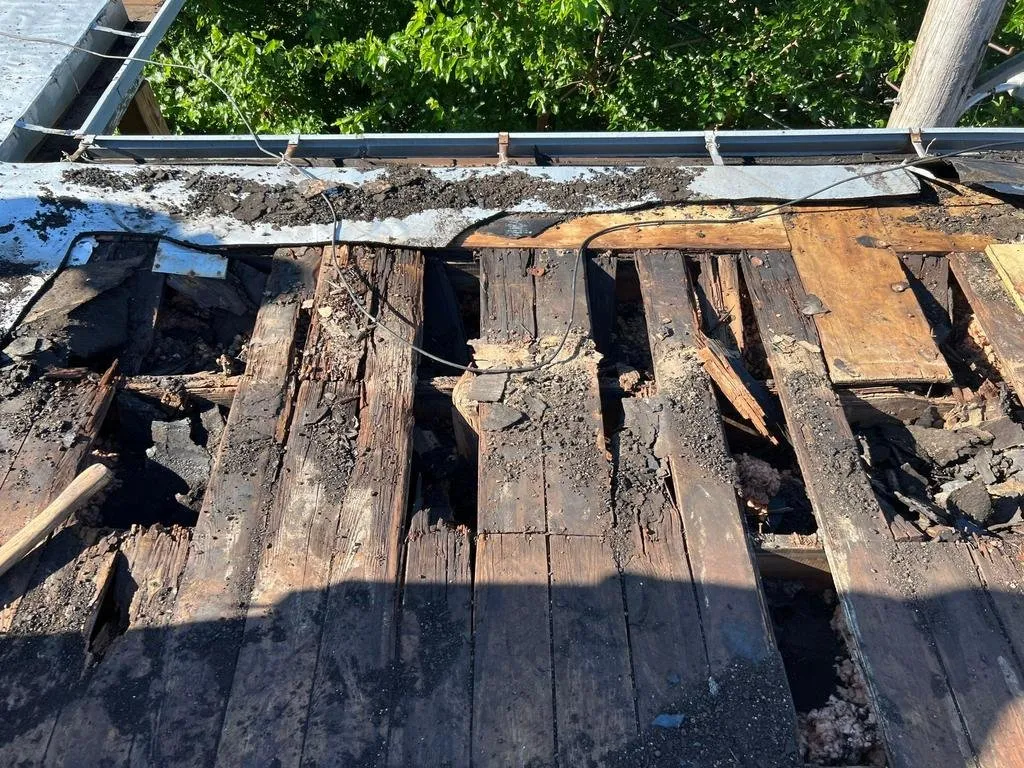
Wood requires moisture, oxygen, and warmth to rot. Roof sheathing usually rots due to one of three common issues:
- Long-Term Shingle Leaks: Water that slips past cracked, missing, or aging shingles slowly saturates the underlayment and plywood underneath. Over months or years, fungal decay weakens the wood fibers.
- Failed Flashing Around Penetrations: The vulnerable junctions around chimneys, skylights, plumbing vent pipes, and roof valleys are prime entry points for driven rain if flashing is corroded or improperly sealed.
- Trapped Attic Condensation: In humid Virginia summers and chilly winters, poor attic ventilation traps hot, moist air against the underside of the roof deck. Over time, moisture collects, causing the sheathing to soften, delaminate, or grow black mold from the inside out.
Step-by-Step: How a Professional Contractor Handles Rotten Decking
A qualified roofing contractor will never cover rotted plywood with new shingles. Doing so creates an uneven surface, prevents roofing nails from holding, compromises wind-resistance ratings, and voids manufacturer warranties.
Here is the exact process reputable contractors follow when rotten wood is uncovered:
1. Immediate Inspection and Documentation
As soon as the old shingles and underlayment are stripped away, the crew inspects the bare deck. The project supervisor identifies spongy, blackened, or sagging sheets and documents the damage with clear photos so you can see the issue firsthand.
2. Rafter and Truss Assessment
Once the rotted sheathing is removed, the team inspects the underlying structural framing. In the vast majority of cases, the rot is localized only to the plywood. However, if water penetration has persisted for years, the rafters beneath may require sistering (reinforcing them with new lumber) before new sheathing can be laid.
3. Precise Removal and Replacement
The contractor cuts out the compromised section along the center line of the rafters. They measure and install exterior-grade CDX plywood or OSB matching the exact thickness of your existing deck (typically 1/2-inch or 5/8-inch) to ensure a perfectly level surface. The new wood is secured with code-compliant framing fasteners.
4. Waterproofing Integration
With a clean, sound structural surface in place, the crew installs a synthetic water-resistant underlayment or self-adhering ice and water shield over the repair, locking moisture out before nailing down the new shingles.
How Much Does Replacing Rotted Roof Decking Cost?
Because nobody can see the condition of the wood decking while the old shingles are still in place, rotted decking cannot be fully quantified in the initial roof replacement estimate. Instead, transparent contractors include an open decking clause in the contract.
This clause outlines a fixed unit price per sheet for wood replacement:
- Average Cost Per Sheet: Typically ranges between $85 and $135 per 4x8 sheet of plywood or OSB, which covers both the material and labor.
- Typical Number of Sheets: Most residential roof replacements uncover between 1 and 4 damaged sheets, often concentrated around eaves, valleys, or bathroom exhaust penetrations.
- Major Structural Damage: Extensive neglect or prolonged chronic leaks can require 10 or more sheets, or require rafter repairs, which will be estimated via an explicit change order before work proceeds.
Questions to Ask Your Contractor When Rotted Wood Is Found

Protect Your Roof Investment with Exterior Techs
Finding rotten wood under your roof isn't the end of the world—it is an opportunity to fix hidden vulnerabilities and give your home a rock-solid foundation. At Exterior Techs, our roofing proposals feature clear, upfront line-item pricing for decking replacement so there are zero surprises. Backed by our 10-Year Workmanship Guarantee and manufacturer certifications from GAF and CertainTeed, we ensure your roof is built to last from the rafters up.
Get A Free Quote!
~2 minute response times.

More Exterior Home Improvement Tips
Written with 20 years of hands on experience in Virginia.


Why Local Homeowners Trust Exterior Techs
From Richmond to NoVa we've got your neighbors protected.